
EarthNetwork.com

Building A Greener Future Together...

GreenEarth Network Communities






America's Green Communities
Where is America headed on her journey to become a greener, healthier nation? It's hard for many to see progress being made with congress invested in special interest groups and our nation's dependency on foreign oil. But slowly communities all across the country are wising up to the benefits and advantages of building green, sustainable communities.
Former President Obama's energy plan was first put forward as a great start to getting the country on the right track with the environment and our energy consumption but unfortunately the plan was held up in congress. The plan outlined ways to reduce our nation's reliance on fossil fuels and create new jobs in green industries.
One of the main goals of the plan was to get twenty-five percent of our power from renewable, alternative energy by the year 2025 and to reduce carbon emissions by eighty percent by 2050. Another reachable goal is to bring the carbon dioxide and other greenhouse gas emissions to 1990 levels by 2020.
These goals are achieved by installing a cap-and-trade program for carbon emissions.
The premise of the program would be mandated government caps on emissions; the cap would be based on allowances that would be bought in auctions. The companies who need higher allowances will have to pay for their emissions instead of just being given the right to pollute. Companies that have reduced their emissions can sell their allowance to other companies stimulating the market between businesses. Part of the revenue the government earns in these auctions will be put directly into research and technology for alternative energy strategies.
Along with the emissions cap the plan also outlined several incentive programs to get communities involved in improving the environment. The "cash for clunkers" program gives money to those replacing their old fuel burning vehicles for cars that are more fuel efficient. Tax credits would be given to those who install energy efficient appliances and alternative energy systems in their homes.
Overall, the plan was looking to invest $100 billion (that's only one seventh of the financial sector's bailout) and create 2 million new jobs.
Whether the plan passes through congress or not it's clear that communities in America are choosing to show initiative and take matters in their own hands. A growing number of developments are appearing that adhere to strict green guidelines. These communities are proving that not only is living green possible but it can happen without a struggle when properly planned.
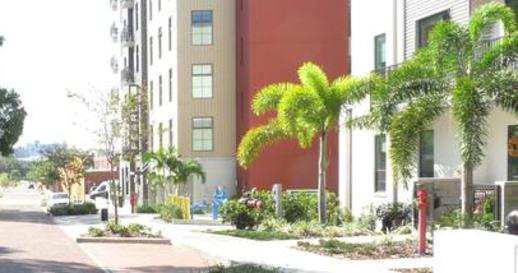
Green communities establish guidelines and use smart planning to grow. They carefully design and plan the layout of the community, paying close attention to environmental impacts and smart growth. They locate themselves within existing developments to revitalize brown fields and run down areas. This keeps the growth from spreading to undeveloped areas and preserves the existing environment (preventing urban sprawl).
The communities are designed to encourage alternative transportation and are walk-able and bike-friendly. Clean, well-lit paths are abundant throughout the area and encourage citizens to get out and enjoy their surroundings. One green community in Florida is even providing electric cars at various charging stations in place of allowing traditional vehicles on their roads.
Water conservation is also a top priority using smart irrigation and native landscaping. It goes without saying that these communities use only energy efficient appliances. Several developments are even going completely off-grid relying solely on solar and wind power.
In these neighborhoods the structures are built using renewable, recyclable materials with emphasis on compact and efficient designs. The area leaders ensure that criteria are met before building can begin and before the structures pass inspection. All of these ideas integrate into a community that illustrates green living is entirely possible.
Cities across the nation are adopting these guidelines and smart development is taking place of giant conglomerates greedily consuming land in areas that don't need excessive expansion. Citizens are fighting back. In Lake Billy Chinook, OR the town operates completely of the grid and they like it that way.
Online forums and groups attract more and more members every day. The number of homeowners switching to renewable power grows by a third every year. Currently there are about 180,000 people living totally off the power grid. People are communicating with each other and learning we can make an impact with or without the help of congress.
Citizens are working with each other to spread awareness about the dangers of our inexcusable wastefulness of energy. Whether the government gets behind the people or not changes are being made and while they may seem small at first, overtime the citizens of this country can be heard. It's time our officials start listening to the people who pay their salaries and realize we cannot continue down the path we are on.
For more information on green communities and to connect with others passionate about change join our solar forum. Here you can discuss ideas and views with other people interested in solar power and green living. Even those just looking to save money on energy during these trying times will find useful information on becoming more energy efficient homeowners.



Funding Resources for Green Infrastructure
Numerous resources are available for funding green infrastructure projects, including federal and state government programs, local funding mechanisms, and private sector investments. Many of these opportunities have emerged in response to the growing recognition of green infrastructure's multiple benefits and the need for new financial models.
Federal and state government funding
Environmental Protection Agency (EPA): The EPA offers several grant programs, including the Section 319 Nonpoint Source Program, the National Estuary Program (NEP), and the Urban Waters Small Grants Program. The EPA also provides resources like the Water Finance Clearinghouse, a database of financial assistance sources, and technical assistance programs like WaterTA.
Federal Emergency Management Agency (FEMA): The Hazard Mitigation Grant Program (HMGP) can fund green infrastructure projects that mitigate the risks of future disasters, such as flooding. The Building Resilient Infrastructure and Communities (BRIC) grant is another source from FEMA.
Department of Housing and Urban Development (HUD): Community Development Block Grants (CDBG) can be used for green infrastructure projects that support affordable housing, neighborhood stabilization, and economic development. The Section 108 Loan Guarantee Program can also be used to guarantee loans for these projects.
Department of Transportation (DOT): The Transportation Alternatives Program (TAP) provides funding for projects like off-road trails and sidewalks, which can include green infrastructure features.
U.S. Department of Agriculture (USDA): The Rural Development Water and Environmental Programs (WEP) offer financing and technical assistance for green infrastructure in communities with populations of 10,000 or less.
Clean Water and Drinking Water State Revolving Funds (SRFs): These federal-state partnerships provide low-cost financing for a wide range of water quality and infrastructure projects, including many green infrastructure installations.
Local government funding and mechanisms
Stormwater Utility Fees: Some local governments establish dedicated stormwater fees for properties, with the revenue supporting a city's green infrastructure program.
Green Bonds: Municipalities can issue green bonds to finance environmentally beneficial projects, which may attract investors interested in environmental, social, and governance (ESG) factors.
Permit Fees: Fees assessed on new construction or development can be used to generate revenue for green infrastructure.
Innovative Financing: Some cities use financial benefits derived from green infrastructure—such as increased property values or reduced public health costs—to capture revenue that can help fund projects.
Private and public-private partnerships
Private Credit and Investment: Private markets, including private credit, private equity, and venture capital, are playing an increasing role in financing green investments and innovative environmental technologies. Private entities may invest in green infrastructure projects through public-private partnerships (P3s), potentially reducing costs and expediting project delivery.
Community-Based Public-Private Partnerships (CBP3s): This model brings together local governments and private entities for large-scale green stormwater infrastructure projects. CBP3s can leverage private investment to expand project scope and share financial risk.
Impact Investing: Private investors focused on environmental impact can support green infrastructure; especially natural capital projects related to biodiversity and sustainable land use.
Corporate Partnerships: Some corporations engage in green infrastructure projects as part of their environmental initiatives. For example, tax incentives can be used to support private companies integrating green infrastructure, such as green roofs, into their operations.



Become a Green Power Partner
What is Green Power?
Green Power Partnership Agreement
Top Partner Rankings
Green Power Leadership Awards
EPA's Green Power Partnership (GPP) is a free, voluntary program, helping to increase the use of green power among organizations in the United States as a way to reduce the environmental impacts associated with conventional electricity use. Hundreds of Partner organizations collectively use billions of kilowatt-hours of green power annually.
Our Partners include a wide variety of leading organizations such as:
Fortune 500® companies
Small and medium sized businesses
Local, state, tribal, and federal governments
Communities
Colleges and universities
Organizations ineligible to join the program include:
Green power providers
Individuals and private residences
EPA invites your organization to join the hundreds of other organizations that are improving their environmental performance and reducing the risks associated with climate change by switching to green power.
To be eligible, organizations must use green power at a level that meets or exceeds the partnership benchmark requirements and agree to update EPA on their green power use annually. In exchange, Green Power Partners get valuable recognition and assistance in promoting their green power use.
Partner organizations are listed on the GPP website and can place on our Top Partner List Rankings; can participate in other Program Initiatives, if applicable; and have access to expert tools and resources, press and other media promotions, and additional recognition opportunities, such as the Green Power Leadership Awards.
Find out more about about the steps involved in becoming a Green Power Partner.
Contact Us to ask a question, provide feedback, or report a problem.
Green Power Partnership
Program Overview
Green Power Markets
Switch to Green Power
Energy use is fundamental to economic activity—powering homes and businesses. Historically, increased economic growth has been driven primarily by energy used from fossil fuels, with the unintended consequence of increased air pollution and climate change. However, a wide array of economically viable and environmentally preferable renewable energy technologies are available today.
In 2001, EPA launched the Green Power Partnership to increase the use of renewable electricity in the United States. The Green Power Partnership is a voluntary program that encourages organizations to use green power as a way to reduce the environmental impacts associated with conventional electricity use. In return for technical assistance and recognition, Partners commit to use green power for all, or a portion, of their annual electricity consumption. EPA defines green power as a subset of renewable resources that represent those resources that offer the highest environmental benefit.
The overall vision of the Green Power Partnership is to protect human health and the environment by expanding U.S. renewable energy markets through the voluntary use of green power. Some key strategic program elements associated with this program include:
Educating our stakeholders on voluntary procurement pathways within U.S. renewable energy markets
Motivating our stakeholders to use green power
Recognizing leadership in green power procurement
Today, the Partnership currently has hundreds of Partner organizations voluntarily using billions of kilowatt-hours of green power annually.
Green Power Partnership
Basic Program Information
The Green Power Partnership is a voluntary program that encourages organizations to use green power as a way to reduce the environmental impacts associated with conventional electricity use. The Partnership currently has more than 1,300 Partner organizations voluntarily using billions of kilowatt-hours of green power annually. Partners include a wide variety of leading organizations such as Fortune 500® companies; small and medium sized businesses; local, state, and federal governments; and colleges and universities.
Program Overview: The Green Power Partnership overview provides some background information about the program objectives.
Program Success Metrics: Annually, EPA evaluates its voluntary programs and reviews the environmental outcomes and outputs associated with engagement with these programs. This page provides some information about the most recent program review.
